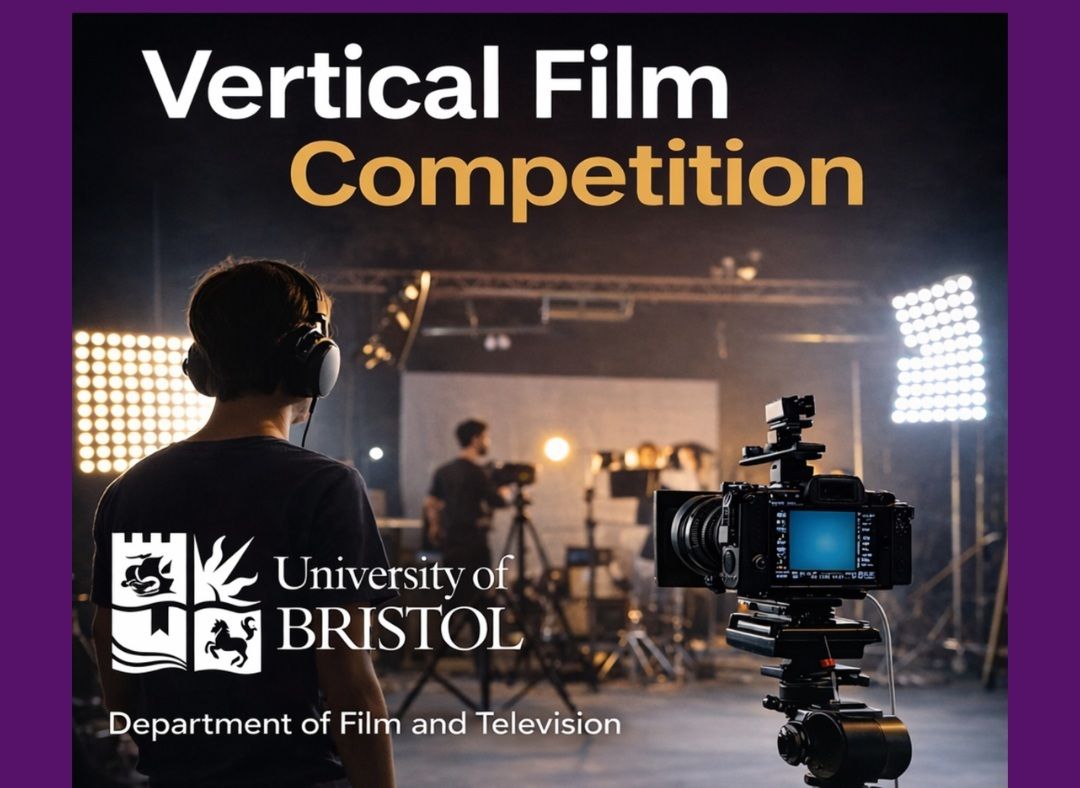
 The University of Bristol’s Department of Film and Television have announced winners for its inaugural Vertical Film Competition, delivered in partnership with Bristol UNESCO City of Film and sponsored by Sony.
The competition was open to any University of Bristol student graduating from their Third Year or MA in Summer 2026. Students formed filmmaking teams of three to four, and set out to create and showcase a Vertical Film series strictly between eight and nine minutes long, with six separate episodes.
Groups were assigned an industry mentor to support them and help them connect with industry professionals, supported by Bristol UNESCO City of Film. Competition prizes were supplied by sponsor Sony.
The three winning films are:
(1st place) DJ Nemesis: ‘A DJ duo’s small row turns nasty.’
(2nd place) The Goat Gully Secret: ‘A teenage girl is found dead by an aspiring true crime blogger, an ex boyfriend’s DNA is all over her, both are being investigated by a Detective. Will the real murderer slip free of the case?’
(3rd place) The Final Housemate: ‘A group of Uni students move into a shared house and begin to notice strange, unexplained things happening, leading them to believe they have a resident ghost.’
Piers Leigh, Senior Lecturer in Cinematography & Public Engagement Officer says: “I am delighted to announce the three winners of the Vertical Film Competition 2026. Huge thanks to our amazing judges and we are hugely appreciative of their time and input. We’ll be back next year with a seven day competition which we hope to run alongside students from other UNESCO Cities of Film around the world. Stay tuned!”
Judges included Director and University alumnus Alex Parkinson (Last Breath), Director and Story Fixer Nigel Levy (Mothers & Daughters), director Poppy de Villeneuve (Lionesses), Sonita Alleyne OBE (Journalist, Broadcaster and Master of Jesus College Cambridge), Andrei Marcu (Sony) and Natalie Moore (Bristol UNESCO City of Film Manager).
About Vertical Filmmaking
The emerging format of Vertical Filmmaking has been gathering some serious global momentum in recent years. Propelled by platforms like TikTok and growing consumer demand for short-form content, the format is expected to be worth $14 billion (£11bn) by 2027. Originated in China, the distribution medium consists of minute-long episodes designed for smartphones, shot with a vertical frame that pulls the audience closer to the subject. Typically the focus hones in on one or two characters, a simple, bitesize moment or a gesture.
Fans praise its accessibility and the fact that the format has the power to democratise storytelling – with a decent smartphone, creators can craft content that reaches millions without needing to be seen on the traditional cinema screen. With platforms like Snapchat and Meta now funding entire vertical series, the pace of growth for this type of filmmaking shows no signs of slowing. Some directors are even experimenting with vertical versions of traditional films for mobile audiences, in order to reshape films for a world that is consuming content differently.